Monday, 14 June 2010

Rezi van Lankveld - Between abraction and figuration


Good morning everyone! Today’s artist has for sure a unique style, a perfect mix between abstraction and figuration. Her name is Rezi van Lankveld and she was born in 1973 in Almelo, The Netherlands. Today, she lives and works in Amsterdam. Her compositions appear barely, as blurry phantasms. Her method of approach is to lay wooden boards on the floor and pour layers of oil paint onto them. She works through the patterns made by the paint until an image emerges, often returning to the floor and starting afresh with a new colour until she finds the one that suits. Traces of this exploratory process persist on the sides of the board – in bright multicoloured drips of dried paint – and in the thickness of the impasto of the painting’s duo-tone surface. On the finished surface as well, brushstrokes and droplets attest to the spontaneity of her technique, recalling the contingency of the event – that the image so easily might not have existed.

Buon giorno a tutti! L’artista di oggi ha di sicuro uno stile unico, un mix perfetto tra astratto e figurative. Il suo nome è Rezi van Lankveld e è nata nel 1973 a Almelo, in Olanda. Oggi, lavora e vive ad Amsterdam. Le sue composizioni sono appena percettibili, come fantasmi sfuocati. Il suo metodo di lavoro consiste nell’appoggiare a terra delle tavole di legno e distendervi sopra uno strato di colori ad olio. Lei, poi, inizia a lavorare sulle linee create dai colori fino a quando non emerge una figura. Spesso deve utlizzare un nuovo colore per trovare ciò che sta cercando. Tracce del suo percorso esplorativo rimangono ai lati della tavola e lo spessore del colore del dipinto sulla superficie bicolore. Una volta che l’opera è finita, pennellate e gocce testimoniano la spontaneità della sua tecnica, richiamando la contingenza dell’evento, e cioè che l’immagine poteva così facilmente non esistere.

For further information see also http://www.theapproach.co.uk/artists/lankveld/ .

All the images posted here are Rezi van Lankveld’s works.


Friday, 11 June 2010

Lars Garten - Catching moments with polaroids

Every artist is a cannibal

Lieselotte

Falling at your feet


Portrait of a girl


- Can you tell us something about yourself? When did you discover your passion for photography and polaroid?
Born 1973, I grew up in a small village in the province of Nordrhein-Westfalen, Germany. My grandfather had a little chemist's shop and after closing at 6.00 pm he disappeared in the shop's darkroom to develop all the films the customers had left on that day. This room was a strict "No-Children-Zone" and therefore everything that happened behind the door was a big mystery to me. And there was more to it than that! When the door opened again, voilá, lots of photographs hanging on the line! Could something be more desirable? How happy was I when I got my first camera, my grandfather's old Agfamatic 5008 macro pocket. That's where the story began. After quite some photographs I ended up in Berlin. Here I stumbled upon polaroids and a Polaroid SX-70 Landcamera-Alpha-1. When I took my first polaroids in October 2005 I knew I was lost, and now: for me it is all about polaroiding.

- How do you create your works?
Sometimes I do not see much for a long period. But some days there are things that just take my breath away. That's when I feel my heart pounding while getting my SX-70 ready for shooting. And then it's just "pulling the trigger" and of course: no digital strings attached!

- What are your main sources of inspirations?
Things I see, people I meet, places I go, books I read, music I am listening to: it's just daily life.

- What is the work that you are more attached? Why?
I admire the work of lots of different photographers like e.g. Saul Leiter, Richard Avedon, Leonard Freed, Robert Lebeck or Peggy Sirota. But I also love some photographs of more unpopular artists like Franck Juery, Ivan Wentland, Cyrille Panchot, Tod Brilliant, Thomas Ville, I-Nan Kuo, Urizen Freaza and many others. I do not prefer a special photographic style or a material used. It is important to me that a picture reflects the personal and distinctive photographer's handwriting. A good photograph can be technically a catastrophe as long as it catches the right moment. It has to address your emotions, that's the point. And last but not least: a photograph I am attached to could be everything but digital.

-Ci puoi raccontare qualcosa su di te? Quando hai scopert la tua passione per la fotografia e le polaroid?
Nato nel 1973, sono cresciuto in un piccolo villaggio nella provincia di Nordrhein-Westfalen, in Germania. Mio nonno aveva una piccola drogheria e tutte le sere, dopo aver chiuso alle 6, scompariva nella camera oscura per svilluppare i rullini che i clienti gli avevano portato quel giorno. In quella stanzai bambini non potevano entrare e così tutto ciò che succedeva al di là della stanza rappresentava un grosso mistero per me. E c’era di più. Quando la porta si apriva di nuovo, voilà, ecco che comparivano un sacco di fotografie! Può qualcosa essere più desiderabile? Quanto fui felice quando ricevetti la mia prima maccchina fotografica, la Agfamatic 5008 vecchia di mio nonno. Così p come è iniziata la storia. Dopo aver fotografato per un po’ finii a Berlino. É qui che mi sono imbattuto nelle Polaroid e più precisamente una Polaroid SX-70 Landcamera-Alpha-1. Quando comprai la mia prima polaroid nel 2005, sapevo di essere perso e ora: per me esiste solo la polaroid.

- Come crei i tuoi lavori?
Certe volte non vedo nulla per un lungo periodo, ma ci sono certi giorni in cui mi imbatto in cse capaci di togliermi il respiro. Questo succede quando sento il martellio del mio cuore mentre prendo la macchina pronta per scattare. Dopo è solo una questione di scatto, e ovviamente non uso niente di digitale.

-Quali sono le tue principali fonti d’ispirazione?
Cose che vedo, persone che incontro, posti che visito, libri che leggo, musica che ascolto: è semplicemnte vita quotidiana!

-Quali artisti predilige? Perchè?
Apprezzo i lavori di molti fotografi, come: Saul Leiter, Richard Avedon, Leonard Freed, Robert Lebeck e Peggy Sirota. Ma mi piacciono anche le fotografie di artisti meno popolari, come: Franck Juery, Ivan Wentland, Cyrille Panchot, Tod Brilliant, Thomas Ville, I-Nan Kuo, Urizen Freaza e molti altri. Non prediligo uno stile fotografico in particolare o un particolare tipo di materiale utilizzato. La cosa importante è che la fotografia rifletta lo stile personale dell’autore. Una fotografia può essere tecnicamente una catastrofe purchè catturi il momento giusto. Deve saper indirizzare le tue emozioni, questo è il punto fondamentale. E ultimo, ma non meno importante: una fotografia al quale sono affezionato, può essere tutto, ma non digitale!

For further information see also http://larsgarten.de/ .
All the images posted here are Lars Garten’s works.

YES

WE

CAN!

Wednesday, 9 June 2010

Rachel Lee Hovnanian - The white side of Art


Just to know a new artist, who I like particularly!
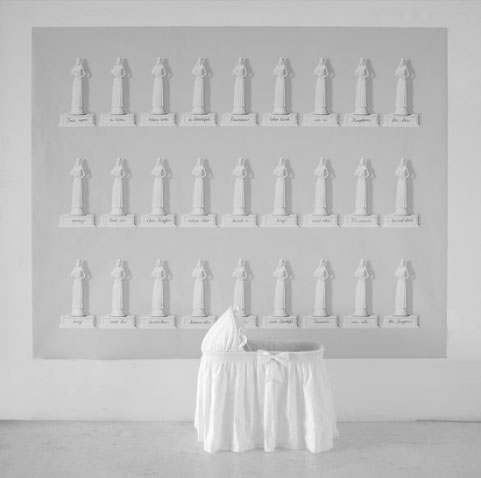
Rachel Lee Hovnanian currently lives and works in New York City, but she was born in Parkersburg, West Virginia, and at the age of six she moved with her family to Texas. Hovnanian studied at the University of Texas in Austin, after she continued her studies in New York City at Parsons School of Design, The Arts Students League, and the National Academy of Design. She is enthralled by beautiful images, including pictures of people or obscure images of pure, isolated subjects. Flowers have this quality, as do the faces of people. So, too, can a landscape radiate pure beauty, untouched by the human hand. This purity is a recurring theme in her work. What caught my attention is the white, the perfection and the cleanness of her art, it seems she is studying the beauty of things and people surrounding us, and tries to fix it in her works.

Un rapido articolo per farvi conoscere una nuova artista che apprezzo particolarmente!
Rachel Lee Hovnanian oggi vive e lavora a New York, ma è nata a Parkersburg, in West Virginia e all’età di sei anni si è trasferita in Texas con la sua famiglia. Hovnanian ha studiato all’università del Texas a Austin e dopo ha proseguito gli studi a NY alla Parsons School of Design, all’ Arts Students League, e alla National Academy of Design. É affascinata dalle immagini belle, inclusi i ritratti di persona e oscure immagini di soggetti isolati e puri. I fiori hanno questa qualità e anche i volti delle persone. Così anche un paesaggio può trasmettere bellezza pura, quando non è toccato dall’uomo. La purezza è un tema ricorrente nelle sue opere. Cosa ha catturato la mia attenzione è il bianco, la perfezione e la purezza nell’arte di Rachel, sembra che lei studi la bellezza delle cose e delle persone che ci circondano e cerchi di fissarla nei suoi lavori.

For further information see also http://www.rachelhovnanian.com/ .
All the images posted here are Rachel Lee Hovnanian’s works.


Monday, 7 June 2010

Barry Underwood - Dreaming lights and photography


Bleu

Trace Blue

Trace Yellow

Norquay Yellow

- Can you tell us something about yourself?
I live in Cleveland (Ohio, Usa) though most of my work is made somewhere else.

- When did you discover your passion for photography?
In college. Just took to it like a duck to water. I did play around with a Polaroid Zip camera when I was a kid. I used to set up my toys in the backyard and photograph them with low to the ground camera angles to try and make the toys seem more realistic. To expand this question, I have a passion or a drive for all kinds of art. Though I use photography, I do not think of myself as only a photographer, but also a sculptor, making installations in the landscape to photograph..

- How do you create your works?
I generate projects one of two ways. Either I begin by responding to a specific place, or I start with drawing out an idea, then looking for a place to make the work. The installations themselves take place in various environments using a variety of light sources: LED lights, glow sticks, glow powder. To give shape to these lights I use different kinds of materials, fabric and paper for example. The projects are shot using film. The exposures can vary anywhere from 15 minutes to 6 hours.

- What are your main sources of inspirations?
Art - painting, installation, drawing, photography, and cinema.
I am also inspired or rather influenced by science and nature and its energy.

- What are the artists you like the most? Why?
The work of Olafur Eliasson, and James Turrell. They make work that is to be experienced rather the simply viewed. And, through this experience it can alter ones perception of themself and place. The first time I experienced an installation by Turrell it was kind of like being punched in the stomach. But in a good way.

- Ci puoi raccontare qualcosa su di te?
Vivo a Cleveland, (Ohio, Usa), anche se la maggior parte dei miei lavori è stata fatta da qualche altra parte.

- Quando hai scoperto la tua passione per la fotografia?
All’università. Con la fotografia mi sono trovato come un’anatra nell’acqua. Da bambino giocavo con una PolaroidZip, mettevo in posa i miei giocattoli in cortile e poi li fotografavo con inquadrature dal basso in modo da farli sembrare più realistici. Allargando la domanda, ho una passione per tutti i tipi d’arte, Nonostante usi la fotografia, non penso a me stesso come un fotografo, ma anche uno scultore, poiché creo le istallazioni da posizionare nel paesaggio che poi fotografo.

- Come crei i tuoi lavori?
I miei lavori nascono in due modi. Sia che inizi rispondendo ad uno spazio specifico, o se inizio partendo da un’idea e dopo cerco un posto in cui realizzarla. Le istallazioni stesse hanno luogo in diversi posti usando diverse fonti di luce: LED, bastoncini e polveri luminose. Per dare forma a queste luci uso materiali differenti, tessuto e carta per esempio. I progetti sono fotografati con l’uso della pellicola. L’esposizione può durare dai 15 minuti alle 6 ore.

- Quali sono le tue principali fonti d’ispirazione?
L’arte, dipinti, istallazioni, disegni, fotografia e cinema. Sono anche ispirato o meglio influenzato dalla scienza e dalla natura e dalla sua energia.

- Quali artisti apprezzi di più? Perché?
L’opera di Olafur Eliasson, e James Turrell. Le loro opere sono da vivere, invece che semplicemente da guardare. Attraverso l’esperienza della loro opera uno può alterare la percezione di sé o del luogo . La prima volta che ho visto un’opera di Turell è stato come se qualcuno mi avesse colpito nello stomaco, ma in un modo positivo.

For further information see also http://www.barryunderwood.com/.
All the images posted here are Barry Underwood’s works.

Rodeo Beach

Miwoktrail

Blue Line

Friday, 4 June 2010

Danilo Martinis - Geometrical forms and human figures


SG1

Default

DS1

Ghost in the stripes shell

- Can you tell us something about you? How did you discover your passion for art?
My names is Danilo Martinis, I’m 34 years old, born and grew up in Brianza (near Milan, Italy). I started working as a designer in my father’s company, sofa producer. I’ve always had passion for art since I was a child, my grandfather was a painter and I admire his works, even if I’ve never know him.

- You have a very personal and unique style, can you explain us how did it bear?
At the beginning I used to paint to complete the objects that I created, with the same colours and shapes. Now the style is changed, I always start from human figure, sometimes I use models, others I invent poses and than I add the geometrical shapes that perfectly fit the paint.

- What are your main inspirations?
Architecture and design are the main, but also music books, film and photography. I think that everything surrounding can be a source of inspiration.

- What is the work you are more attached to? Why?
It is a difficult choice. As soon as I complete a paint I can’t appreciate it, I’m never satisfied of what I’ve done, but after a while I think that my favourite works are those with geometrical shapes.

- Puoi raccontarci qualcosa su di te? Com'è nata la tua passione per l'arte?
Mi Chiamo Danilo Martinis, trentaquattro anni, nato e cresciuto in Brianza. Ho iniziato come designer nell'azienda di mio padre, produttore di divani. La passione per l'arte l'ho sempre avuta, mio nonno era un pittore e, anche se non l'ho mai conosciuto, ho sempre ammirato le sue opere.

- I tuoi lavori sono contraddistinti da uno stile unico, puoi spiegarci come nasce?
Inizialmente dipingevo per completare gli oggetti che creavo, con gli stessi colori e forme. Adesso lo stile è cambiato, comincio sempre dalla figura umana, a volte con modelli,
altre inventandomi le pose e poi li suddivido con forme geometriche che si fondono con il resto del dipinto.

- Quali sono le tue principali fonti d'ispirazione?
L'architettura e il design sono le mie principali fonti di ispirazione poi anche la musica, libri, film, fotografia... Penso che tutto ciò che ci circonda possa essere fonte di ispirazione.

- Qual'è il lavoro a cui sei più affezionato? Perchè?
E' difficele scegliere, appena finisco un dipinto non riesco ad apprezzarlo, non sono mai soddisfatto di quello che ho fatto, ma con il tempo penso che i lavori meglio riusciti siano quelli con le figure geometriche.

For further information see also http://www.danilomartinis.com/
All the images posted here are by Danilo Martinis


Linked

Mao

Plaid

Sadness in square

Wednesday, 2 June 2010

Kim Anno - Art and social matters


Float

Styx copy

Thundercrack


- Can you tell us something about yourself? When did you discover your passion for Art?
I am an artist who works in painting, photography, and video. I am also a professor at the California College of the Arts in San Francisco.
I have always thought that expanding the function of art in society, and the roles that artists can play in the world is an important thing. I am an artist who likes to push the margins of particular disciplines. For example i think that abstraction is more of a verb and less of a noun. I think that abstracting something has existed from the beginning of time, and artists do this willingly and with great passion and desire. The desire to create a space where viewers have to think, where viewers have to interact with an image in a primary way is something that occurs in ancient, the middle ages, modern, and the contemporary world. I discovered my passion for art making when I was a young child but at the same time I began to look at society and life in a contextual way. That is to say, the microcosm of art making occurred to me at the same time the macrocosm of outer space or the universe. So I felt that I effect my own identity and the outside world in some small way.

- Which is the idea behind your art?
The idea behind my art now is rubbing up against the issues of climate change, and creating work that will get people to think more deeply about it. For example in my video i am trying to take the image of American or Western idealism of nature and spoil that, so that people will see how central this issue is. For example in my Yosemite video i take the image of Albert Bierdstadt's Yosemite valley painting (which was part of the impetus for the establishing of American National park system) and plunge it into water and spoil it with inks. The image rolls itself up and disappears and we are left with the residue of murky ink. I see this as a projection where the human being has a body relationship to the image. The paintings are also influenced by the changing landscape of the ice sheets melting, and rearranging themselves. "Thundercrack" is a land form exploding into the endless metal sea that the image is painted on. I paint on aluminum panel because it offers a kind of illusionism that evokes endless water or air. This to me is the essence of an abstract image, the image is forming itself. I like to think that this is the verb of "abstract", "abstract thought" There is nothing more abstract than the thought of the disappearing earth as we know it. I think of water coming into every oriface in both urban and rural areas around the world.

- How do you create your works?
So in video i plunge things into tanks of water and interact with them, and film them with high definition video. In photography i do the same with large negative cameras and print them large. I put trash, plants, fragments of things into the water. For example i am making a model of the giant gyre of plastic trash out in the Pacific ocean, and i am going to spin this in the San Francisco Bay and film this underwater, with the high def video camera.
In painting, I pour white paint over the metal and then paint with oil glaze on top of the metal, to create nuance of color and suggestion of the blur between land and water.

- What are your main sources of inspirations?
the main sources of my inspiration are other artists work, like both filmmakers, composers, performers, painters,etc. I also am inspired by environmental activists, climate justice activists. The developed world and the developing world have a tension between them that is provocative and important to me. This spurs me on to make my work. I hope that my work presents the questions, not necessarily the answers. I am interested in art that causes me to have an experience that is beyond any particular media. The depth of the experience looms larger to me that the recognition of how something is made.

- Ci puoi raccontare qualcosa su di te? Quando hai scoperto la tua passione per l’arte?
Sono un artista che lavora sia dipingendo, sia con la fotografia, sia con i video. Sono anche un professore al California College di Arte a San Francisco.
Ho sempre pensato che espandere il ruolo dell’arte nella società e il ruolo che gli artisti possono assumere nel mondo sia una cosa importante. Sono un artista che cerca di ampliare i confini di certe discipline. Per esempio penso che l’astrazione abbia qualcosa in più del verbo e meno del nome. Penso che “astrarre qualcosa” sia un azione compiuta dall’inizio dei tempi, e che gli artisti l’abbiano sempre fatto con grande passione e desiderio. Il desiderio di creare uno spazio dove l’osservatore debba pensare, interagire con un’immagine è una cosa che esiste dall’antichità e che dal Medioevo si è trasmessa fino al mondo contemporaneo. Ho scoperto la mia passione per la creazione artistica quando ero un bambino, ma allo stesso tempo iniziai ad osservare anche la società e la vita. Questo è per dire che mi sono accorto del microcosmo dell’arte allo stesso tempo in cui ho preso coscienza del macrocosmo del mondo esterno e dell’universo.

- Qual’è l’idea che sta dietro la tua arte?
In questo momento sto concentrando il mio lavoro sulla questione legata al cambiamento climatico e sto creando opere che permettano ale persone di fermarsi a riflettere su questo problema. Per esempio, nei miei video ho cercato di prendere l’idea Americana o Occidentale di natura e smitizzarla in modo da far vedere quanto importante sia il problema del surriscaldamento terrestre. Nel video Yosemite ho usato l’immagine del dipinto di Albert Bierdstadt “Yosemite valley” e l’ho immerso nell’acqua e l’ho macchiato con l’inchiostro. L’immagine si è arrotolata su se stessa ed è sparita e noi siamo rimasti con il residuo d’inchiostro. In questo vedo una proiezione dove l’essere umano si può dire che abbia quasi un contatto fisico con l’immagine. I dipinti allo stesso modo si riferiscono ai campiamenti climatici e allo scioglimento delle calotte polari. . "Thundercrack" è una forma di terreno che esplode nel mare di metallo senza fine su cui l’immagine è dipinta. Dipingo su pannelli di alluminio perché creano una sorta di illusione che evoca l’acqua o l’aria. Questa è l’essenza dell’immagine astratta , l’immagine si crea da sola. Secondo me non c’è nulla di più astratto della “terra che svanisce” quando noi ne siamo coscienti.

- Come crei I tuoi lavori?
Nei video, immergo cose in vasche d’acqua e interagisco con loro, il tutto mentre filmo con un video in alta definizione. Nella fotografia, faccio lo stesso. In acqua metto pattumiera, piante, frammenti di cose. Per esempio, sto costruendo un modello dell’aglomerato gigante di plastica nell’oceano Pacifico e ho intenzione di metterlo nella baia di S Francisco per poi riprenderlo sott’acqua. Per i dipinti, invece, verso tinte bianche sul metallo e poi le ripasso con uno smalto ad olio in modo da creare nuance di colori e suggestioni.

- Quali sono le tue principali fonti d’spirazione?
Le principali fonti d’ispirazione per me sono I lavori degli altri, come registi, compositori, pittori… sono anche ispirato dalle attività per l’ambiente. Tra il mondo sviluppato e quello che si può ancora sviluppare esiste una tensione molto importante per me. Questo mi spinge a proseguire il mio lavoro. Spero che il mio lavoro ponga tante domande, non necessariamente fornendo risposte. Sono interessato all’arte che mi permetta di avere un’esperienza, indipendentemente dal media. La profondità dell’esperienza rimane impressa in me, molto di più della conoscenza di come un’opera venga fatta.

All the images posted here are Kim Anno's works.
For further information see also http://www.kimanno.com/.


Yosemite

Bayou

Red-flood
Monday, 31 May 2010

Bruce Munro - the positive point of view of Art


Computer Generated Image (CGI) of Munro's design for CDSea (to be installed June 19/20).
Image credit: Steven Weeks

Photograph of Munro's Field of Light at the Eden Project in Cornwall 2008/2009.
Photo by Mark Pickthall.

Photograph of the same, also by Mark Pickthall.

- Can you tell us something about yourself?
A quick answer as I am about to meet a friend at the village pub …I love Italian food and positive people.

-When did you discover your passion for art?
When I was five , I remember loving drawing a Viking ship . By the time I was eight I painted my first oil painting , and I was hooked. I remember the paint remained wet and it was a challenge ( which I enjoyed). It was the first time I consciously became aware of the characteristics of a material.

- How do you create your works? (referring to the installations)
It starts with an idea that is usually from a good memory, experience or feeling. I believe good things in life are much more important to express and I am bored of seeing 'down' art. The installation process is a method for me to recreate the idea into another format. Often an installation will inspire stories of its own; its a bit like the game of 'Chinese Whispers'. It allows one to enjoy other people's art without needing to know anything about them.

- What are your main sources of inspirations?
It sounds cliché, but everything is a source of inspiration. I believe in both Science (cause and effect) as well as the Buddhist concept of Karma.

- What do you want to transmit with your art to people?
I am fifty years old. I feel that I have barely started. I am very excited by art because I have just discovered that the subject matter that inspires me has been with me all my life. I am less self-conscious and I can be more honest. Time is precious. The scientist David Bohn described reality as “Unbroken wholeness in flowing movement”. This is so true; and I want to describe both this and other ideas through my art.

- Ci puoi raccontare qualcosa su di te?
Una risposta veloce perché sto per incontrare un amico al “village pub”.. amo il cibo italiano e le persone ottimiste.

- Quando hai scoperto la tua passione per l’arte?
Quando avevo cinque anni mi ricordo che mi piacevano i disegni di una barca vichinga. All’età di otto anni creai il mio primo dipinto ad olio, e ne rimasi innamorato. Mi ricordo che il dipinto non si asciugava, è stata una sfida che ho apprezzato molto. È stata la prima volta che presi coscienza delle caratteristiche di un materiale.

- Come crei i tuoi lavori? (con riferimento alle istallazioni)
Il tutto inizia con un’idea che deriva di solito da un ricordo piacevole, o un’esperienza o una sensazione. Credo che le cose positive della vita siano molto più importanti da esprimere. Sono annoiato dall’arte negativa e pessimista. L’istallazione per me è un modo per rappresentare l’idea in un diverso formato. Spesso un’istallazione ispira storie di suo, un po’ come il gioco “Telefono Senzafili”. Permette agli osservatori di apprezzare l’arte di qualcuno senza sapere niente di quella persona.

- Quali sono le tue principali fonti d’ispirazione?
Sembrerà scontato, ma tutto è una fonte d’ispirazione. Credo sia nella Scienza (causa-effetto), come nel concetto Buddista del Karma.

- Cosa vuoi rappresentare con la tua arte?
Ho cinquant’anni. Mi sento come se avessi appena iniziato. Sono molto emozionato dall’arte perché ho da poco scoperto che l’argomento che mi affascina ed è fonte per me di ispirazione è stato con me tutta la vita. Sono meno cosciente di me stesso e posso invece essere più onesto. Il tempo è prezioso. Lo scienziato David Bohn ha descritto la realtà come “intatta totalità in fluente movimento”. Questo è completamene vero e io attraverso la mia arte voglio rappresentare questa e altre idee.

For further information see also www.brucemunro.co.uk/

Photograph of a prototype Water Tower by Munro, standing in Long Knoll Field.
Photo by Mark Pickthall


Computer Generated Images (CGI) of the Water Towers installation by Munro, which will be at Salisbury Cathedral UK in January 2011.


Computer Generated Images (CGI) of the Water Towers installation by Munro, which will be at Salisbury Cathedral UK in January 2011.

Related Posts Plugin for WordPress, Blogger...