
Showing posts with label polaroid. Show all posts
Showing posts with label polaroid. Show all posts
Monday, 8 November 2010
Friday, 11 June 2010
Lars Garten - Catching moments with polaroids

Every artist is a cannibal

Lieselotte

Falling at your feet

Portrait of a girl
- Can you tell us something about yourself? When did you discover your passion for photography and polaroid?
Born 1973, I grew up in a small village in the province of Nordrhein-Westfalen, Germany. My grandfather had a little chemist's shop and after closing at 6.00 pm he disappeared in the shop's darkroom to develop all the films the customers had left on that day. This room was a strict "No-Children-Zone" and therefore everything that happened behind the door was a big mystery to me. And there was more to it than that! When the door opened again, voilá, lots of photographs hanging on the line! Could something be more desirable? How happy was I when I got my first camera, my grandfather's old Agfamatic 5008 macro pocket. That's where the story began. After quite some photographs I ended up in Berlin. Here I stumbled upon polaroids and a Polaroid SX-70 Landcamera-Alpha-1. When I took my first polaroids in October 2005 I knew I was lost, and now: for me it is all about polaroiding.
- How do you create your works?
Sometimes I do not see much for a long period. But some days there are things that just take my breath away. That's when I feel my heart pounding while getting my SX-70 ready for shooting. And then it's just "pulling the trigger" and of course: no digital strings attached!
- What are your main sources of inspirations?
Things I see, people I meet, places I go, books I read, music I am listening to: it's just daily life.
- What is the work that you are more attached? Why?
I admire the work of lots of different photographers like e.g. Saul Leiter, Richard Avedon, Leonard Freed, Robert Lebeck or Peggy Sirota. But I also love some photographs of more unpopular artists like Franck Juery, Ivan Wentland, Cyrille Panchot, Tod Brilliant, Thomas Ville, I-Nan Kuo, Urizen Freaza and many others. I do not prefer a special photographic style or a material used. It is important to me that a picture reflects the personal and distinctive photographer's handwriting. A good photograph can be technically a catastrophe as long as it catches the right moment. It has to address your emotions, that's the point. And last but not least: a photograph I am attached to could be everything but digital.
-Ci puoi raccontare qualcosa su di te? Quando hai scopert la tua passione per la fotografia e le polaroid?
Nato nel 1973, sono cresciuto in un piccolo villaggio nella provincia di Nordrhein-Westfalen, in Germania. Mio nonno aveva una piccola drogheria e tutte le sere, dopo aver chiuso alle 6, scompariva nella camera oscura per svilluppare i rullini che i clienti gli avevano portato quel giorno. In quella stanzai bambini non potevano entrare e così tutto ciò che succedeva al di là della stanza rappresentava un grosso mistero per me. E c’era di più. Quando la porta si apriva di nuovo, voilà, ecco che comparivano un sacco di fotografie! Può qualcosa essere più desiderabile? Quanto fui felice quando ricevetti la mia prima maccchina fotografica, la Agfamatic 5008 vecchia di mio nonno. Così p come è iniziata la storia. Dopo aver fotografato per un po’ finii a Berlino. É qui che mi sono imbattuto nelle Polaroid e più precisamente una Polaroid SX-70 Landcamera-Alpha-1. Quando comprai la mia prima polaroid nel 2005, sapevo di essere perso e ora: per me esiste solo la polaroid.
- Come crei i tuoi lavori?
Certe volte non vedo nulla per un lungo periodo, ma ci sono certi giorni in cui mi imbatto in cse capaci di togliermi il respiro. Questo succede quando sento il martellio del mio cuore mentre prendo la macchina pronta per scattare. Dopo è solo una questione di scatto, e ovviamente non uso niente di digitale.
-Quali sono le tue principali fonti d’ispirazione?
Cose che vedo, persone che incontro, posti che visito, libri che leggo, musica che ascolto: è semplicemnte vita quotidiana!
-Quali artisti predilige? Perchè?
Apprezzo i lavori di molti fotografi, come: Saul Leiter, Richard Avedon, Leonard Freed, Robert Lebeck e Peggy Sirota. Ma mi piacciono anche le fotografie di artisti meno popolari, come: Franck Juery, Ivan Wentland, Cyrille Panchot, Tod Brilliant, Thomas Ville, I-Nan Kuo, Urizen Freaza e molti altri. Non prediligo uno stile fotografico in particolare o un particolare tipo di materiale utilizzato. La cosa importante è che la fotografia rifletta lo stile personale dell’autore. Una fotografia può essere tecnicamente una catastrofe purchè catturi il momento giusto. Deve saper indirizzare le tue emozioni, questo è il punto fondamentale. E ultimo, ma non meno importante: una fotografia al quale sono affezionato, può essere tutto, ma non digitale!
For further information see also http://larsgarten.de/ .
All the images posted here are Lars Garten’s works.

YES

WE

CAN!
Monday, 26 April 2010
Lia Saile - Poetry and story telling

From the series "Silence"

From the series "Black Silver"
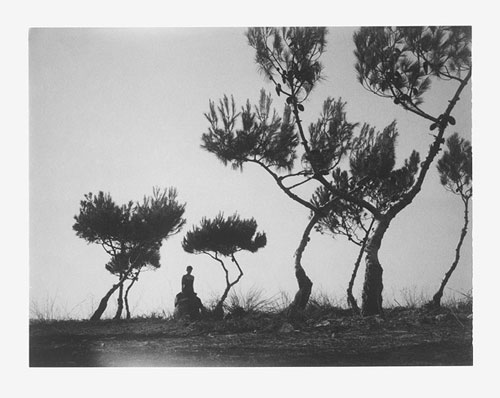
From the series "Silence"
In this post I will present one of my favourite contemporary artist. I’ve tried to interview her, but she wrote me that she was too busy. So, I hope she will answer as soon as she can. While I’m waiting for her replay, I posted here some of her works.
Lia Saile is a German young artist, graduate in Theatre-, Film- & Media-studies at University of Vienna and than moved for a period to Malta where she mainly focus on her photographic career. I knew her on Deviant Art and than I continued to follow her on the web site Scattered Sea (see the link below). Her works makes a great impression to me for the story- telling line usually use in every project, and for the deep poetry content that comes out from every single work.
In questo post vorrei presentare una delle mie artiste preferite. Ho provato a intervistarla, ma lei mi ha risposto che era troppo occupata. Così, spero che risponderà appena le sarà possibile. Mentre aspetto la sua risposta, pubblico sul blog qualche suo lavoro.
Lia Saile è una giovane artista tedesca, laureata in studi di Teatro, Film e Media all’Università di Vienna e poi trasferitasi a Malta dove si è concentrata sulla fotografia. L’ho conosciuta su Deviant Art e ora continuo a seguirla sul suo sito internet Scattered Sea (di cui sotto ho scritto il link). I suoi lavori mi piacciono in particolare per il sottofondo narrativo che sta dietro a ogni progetto, per il forte contenuto poetico che viene fuori da ogni singolo lavoro.
For further information see also http://www.scattered-sea.com/deux/start.html , http://www.seafairy.deviantart.com/ and http://www.polanoir.com/standard?artistid=71

From the series "In Between"

From the series "In Between"

From the series "Zum ursprung"
Friday, 26 March 2010
Paolo Degasperi interview - Photography and polaroid -


Paolo Degasperi interview:
- Why do you decide to focus your work mainly on Polaroid? What do they rapresent for you?
A big part of my snapshots are been shooted between 1996 and 2001. During this period I had a big interest for Polaroid that is a camera that costs 30 euros, with one button, 10 click, brutal flash and a plastic lens. Do something artistc with this camera means win a great challenge. First shoots demoralized me, but after I starter reasoning on the meaning of the istant, on the time, on the shoot sequence, and on the links that can be created between different combinations of images. What affascinated me was to take the istantaneity away from the Polaroid 600. Deprivind it of its main characteristics and of its being withiout denied it. My Polaroids are so far from being istant shoots, even if they are istant shoots, or time fragments.
- What do you want to comunicate with wour works? And what are you looking for with your art?
I like to look at my works as a stone throw down a pond. I think that one of my photo is a good photo when it creates “weaves” in the watcher’s mind. The pond differs accordino to people, the stone remain the same, and the waves vary for every throw. The more my works are open, the more my works are meaningful, the more the numbers of meanings that can be given to them. I’m not interested in given them a title, or suggest an interpretation for them. I’d like that the work’s interpretation reamains an active and intimate think for the spectateur. It’s up to everyone to find a reason to love a shoot rather than an other. If this happens, i will find what I’m looking for.
By my side, I’m not sure of what I’m looking for, probably it’s better say that it’s the shoot to looking for me.
- Are you attached to a work or project, in particular?
There are lots of shoots to whom I’m attached because they pass through places and moments. I love mix them, combining photos of different years, far places and contrasting moments. There was a moment in my life in which I used to like a lot what is defined “fresch fish” in the market, that in the reality it is dead. In the shoot people see that is dead, but it happens rarely that a thought different from the fried dish smalling on their noses comes up to their mind I’m not a fanatic animal right activist, but I lke suggesting messages. For example, the Polaroid game named “shortcircuit” in which one photo run after the other without any start or end.
I also like internal architecture and past life marks found in places. If I have to choose one than I will prefere “Bodyscapes”, body’s part macro shoot that remaind to landscapes such as caves or lakes.
- Why?
Because I can’t get bored of them.
- Finally, if being interviewed what question will you ask to yourself? And can you answer please?
Ok, here I’m not good, so I will start from the answer, that is the thing it is worth always saying while watching a photo and then we will find the question..
I’like to thing to photography as a magic that is able to put together the time, the light and the moment. Photography setaches things surface and as they interact with light. The power of the magic is so strong that preserves and grows during the time. The older the photo is, the stronger its power becomes. Photography is made of our same things: bodies that will vanish in the corse of time.
The soul couldn’t be shot and it tremales faceing the greater invention of ever because it recognize to be there where it vanishs.
So, coming back to the begining the question is: why have you been fascinatine from photography?
Intervista con Paolo Degasperi:
- Perché il suo lavoro si focalizza principalmente sulle polaroid? Cosa rappresentano per lei?
Gran parte delle mie fotografie istantanee sono state scattate tra il 1996 e il 2001. Ho avuto in quegli anni un intenso interesse per la polaroid perchè mi ero imposto di sfidare il medium fotografico partendo dal suo "gound zero": lavorare con una macchina fotografica polaroid e la polaroid a sviluppo istantaneo a sandwich mi avrebbero costretto a confrontarmi con la sola inquadratura. La polaroid 600 è una macchina fotografica da 30 euro, con un bottone, 10 scatti da sparare, un flash brutale e un obiettivo in plastica. Fare qualcosa di artistico così sarebbe stato vincere una bella sfida. I primi scatti sono stati avvilenti. ma poi accogli la sfida e ti appassioni. Ragioni sul significato dell'istante, della sequenza di scatti, delle relazioni che possono instaurarsi nell'accostare tra loro foto che hanno tutte la medesima cornice bianca, ragioni sul tempo oltre lo scatto e via dicendo. Personalmente mi ha affascinato togliere alla polaroid 600 l'idea di istantaneità. Privarla del suo essere, senza negarla. Le mie polaroid sono la cosa più distante possibile da una foto istantanea, seppur ogni foto è un'istantanea, un frammento di tempo.
- Cosa cerca di comunicare attraverso la sua arte? e di cosa è in cerca con i suoi lavori?
MI piace pensare alle mie foto come ad un sasso lanciato nello stagno. Credo che una mia foto sia riuscita quando genera le onde nell'acqua della mente dell'osservatore. Lo stagno è diverso per ogni persona, il sasso lo stesso, le onde sempre varie ad ogni lancio. Più le mie foto sono aperte, più sono significanti e maggiore è il numero di significati che possono prendere. Non mi interessa infatti dare loro un titolo: non voglio nemmeno suggerire una interpretazione. Voglio che l'osservazione sia una cosa attiva e privata dello spettatore. che ognuno trovi un motivo per amare uno scatto piuttosto che un altro. Se questo succede ho trovato quello che cerco. Dal lato mio, invece, non saprei cosa cerco. Più spesso è quello che esce dalle foto che faccio che cerca me.
Talora una sensazione, talora un vuoto, altre volte un pieno. Non parto cercando, mi sforzo di essere pronto ad essere trovato. Si tratta di acuire i sensi in modo da accorgersi di essere trovati quando succede.
- C'è un'opera, o un progetto, alla quale è particolarmente affezionato?
Sono affezionato a molti scatti perchè passano attraverso molti luoghi e posti e momenti. Adoro mischiarli ed accostare in combinazioni casuali foto di anni diversi, luoghi distanti, momenti opposti. Scattano cose che non pensi e nascono connessioni da sole. C'è stato un periodo che amavo molto quello che al mercato viene chiamato pesce fresco: e che è pesce morto. Nelle foto si vede che è morto, ma raramente ci si spende un pensiero diverso dalla frittura che già ti profuma nella mente. Non sono un fanatico animalista, solo mi piacciono i messaggi suggeriti. Come il gioco di Polaroid intitolato "cortoCircuito" in cui le foto si rincorrono una dentro l'altra senza origine nè fine.
Mi piacciono anche gli interni architettonici e i segni delle vite passate nei luoghi, ma credo che se dovessi indicartene una sola, preferirei su tutte la serie "Bodyscapes", le riprese macro di parti del corpo che assomigliano a paesaggi, come grotte o laghetti.
Perché?
Perchè non riescono a stancarmi: il che significa che sono davvero foto riuscite.
- Infine, quale domanda si farebbe se fosse intervistato? E potrebbe gentilmente rispondere?
Qui non sono bravo: per cui prima ti dirò la risposta, che è la cosa che penso valga la pena dire, sempre, quando si guarda una foto. E poi ne tiriamo fuori la domanda...
Mi piace pensare alla fotografia come ad una magia che riesce a legare insieme l'attimo, il tempo, la luce. Stacca la superficie delle cose e come queste interagiscono con la luce, fermandole. Il potere magico è talmente forte che parte di questa magia si conserva e rigenera per sempre: il suo potere non si esaurisce mai ed anzi cresce nel tempo. Più è vecchia la foto più il suo potere è forte. La fotografia è fatta delle stesse cose di cui siamo fatti noi: corpi nel tempo che svaniscono. L'anima che la foto non riesce a fermare trema sorpresa davanti alla più grande invenzione di sempre perchè riconosce di esistere là dove sparisce.
Quindi, tornando a noi, potremmo dire che la domanda è: cosa ti affascina della fotografia?
I apologize for my English, but the text is very complex. For anything that you coudent’t understand, please ask and also if you are interested to something particolar.
See further works of the author on www.paolodegasperi.it a gallery completely dedicated to polaroid artworks!


Above some of the polaroids of the series "bodyscapes"


Subscribe to:
Posts (Atom)
